What is Variegation?
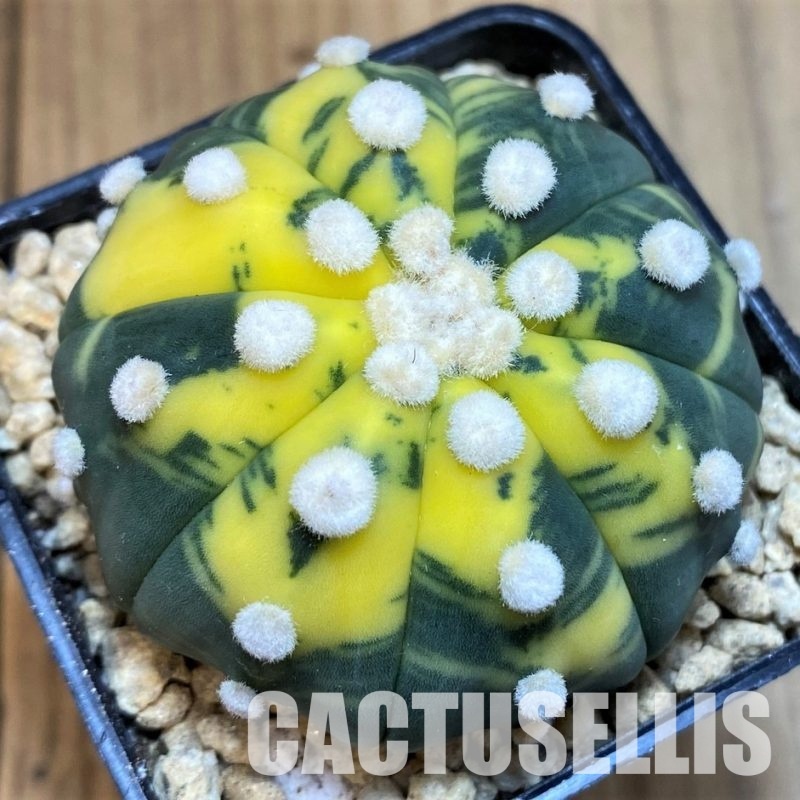
Variegation is a phenomenon in which differences in color or pigmentation appear in plant tissues. It can be permanent or temporary, depending on the cause of its occurrence. These variations often appear as white, yellow, or cream-colored areas on leaves and stems, typically due to the absence of chlorophyll in certain cells.
How Can Variegation Be Induced?
Variegation can occur naturally when plants display color variations caused by genetic mutations. However, humans can also induce variegation through various methods.
One such method is mutagenesis, where radiation (ionizing radiation) is used to create genetic anomalies that lead to pigment deficiencies in plants.
Between 2018 and 2020, some producers of Crassulaceae experimented with methods to “bleach” plants using chemicals and radiation in order to damage cellular tissue and prevent chlorophyll production.
Can Humans Create Variegated Plants?
Yes, there are methods through which humans can create variegated plants, although these methods have limitations and risks.
One of these methods involves ionizing radiation, which can alter the DNA of plants and create anomalies. However, this is a complex and expensive process that requires specialized equipment, and the results are often unpredictable.
Despite this, such methods can lead to permanent variegation, which may be inherited and passed on to the plant’s offspring.
Temporary Variegation
Many plants that appear variegated for a certain period actually show temporary variations. These effects are usually caused by external factors such as:
Acid treatments:
For example, peracetic acid can cause chlorosis in the plant’s apical growth centers, leading to temporary whitening of the leaves. This effect is not permanent, and when the plant resumes normal growth, new tissues regain their normal pigmentation.
Environmental stress conditions:
High or low temperatures, nutrient deficiencies, or improper watering may also cause a temporary loss of pigmentation.
These temporary effects are not inherited and disappear once the plant returns to normal growing conditions.
How to Distinguish Permanent from Temporary Variegation
Permanent Variegation
Permanent variegation is characterized by:
Temporary Variegation
Temporary variegation shows:
The Nature of Induced Variegation
Induced variegation is often associated with damage to plant tissues caused by aggressive chemicals or radiation.
For example, between 2018 and 2020, some Crassulaceae growers experimented with chemicals and radiation to induce chlorosis and create decorative patterns on leaves. However, this method often produces temporary effects, because plants quickly restore normal cellular functions during new growth and lose the variegation.
Methods for Creating Variegation
The most reliable method for creating permanent variegation is ionizing radiation. This technology uses gamma or X-rays to induce mutagenesis, resulting in genetic anomalies within plant cells.
Although this process is long and expensive, it can produce stable and permanent changes in plant pigmentation.
Temporary Variegation Caused by External Conditions
If variegation appears only on young parts of the plant and disappears with new growth, it is usually temporary and not hereditary.
These pigment changes are often caused by unfavorable external conditions or chemical effects, such as:
Acid application:
Peracetic acid, for example, can cause chlorosis (lack of chlorophyll) in the apical growth centers of the plant, leading to temporary pigment loss. This effect is not inherited, and new growth will restore normal pigmentation.
Temperature stress:
Extreme temperatures (very high or very low) may cause temporary pigment loss in leaves and stems, which disappears when conditions stabilize.
Irregular watering or nutrient deficiencies:
A lack of certain elements (such as magnesium or potassium) can also cause temporary pigment changes.
When variegation is limited to young growth and gradually disappears, it is most likely caused by external factors, such as chemical treatments or stress conditions. These changes are not hereditary and are not permanent.
Conclusion
Variegation is a fascinating and attractive phenomenon for many plant collectors. However, it is important to distinguish between permanent and temporary pigment changes.
While permanent variegation can be induced through mutagenesis or radiation, temporary variegation is often the result of environmental stress factors and is not inherited.
Creating stable variegated plants requires a deep understanding of mutagenesis processes and chemical influences. It should also be noted that induced variegation may appear visually striking, but it is not always stable under different growing conditions.
Sources
J. Mera Blog — Extended research on induced plant variegation
ResearchGate — Scientific studies on genetic mutations leading to plant variegation
UCANR.edu — Research on the effects of chemicals on plant pigmentation